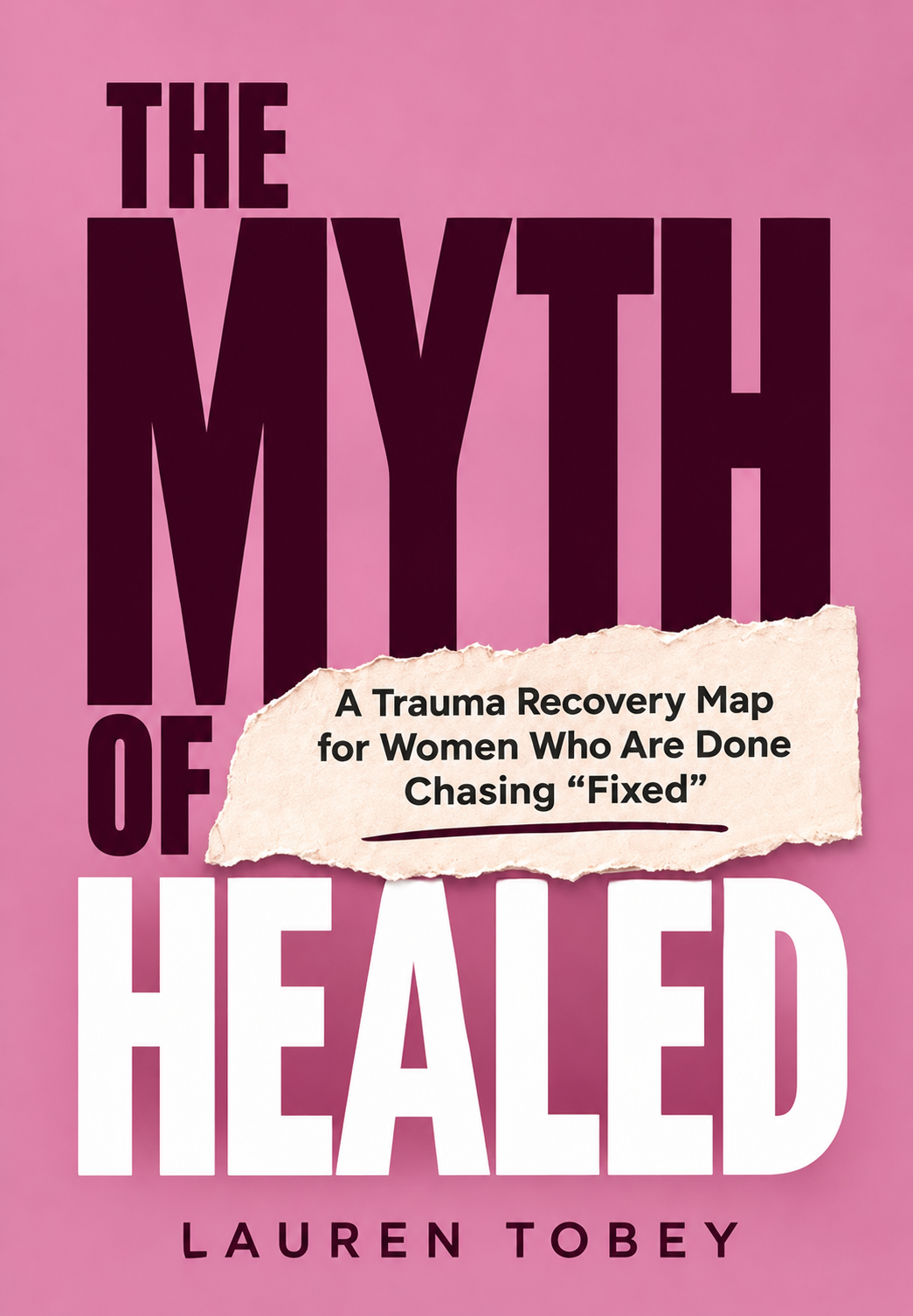
In The Myth of Healed, Certified Trauma Specialist, Lauren Tobey, reveals why “healed” was never the finish line you were promised, and how to get through your hardest weeks without losing a single step of the progress you’ve made.

Have you ever had a day where everyone else's needs got met on time and yours never came up? The school message got answered by nine. The urgent email got handled. Someone asked what you wanted for dinner, and "whatever's easiest" came out, because reaching for an actual opinion would have taken energy that wasn't there.
From the outside, that day looks fine. Nobody worries about the woman who remembers every appointment.
Then the house goes quiet, and a voice that waited all day finally gets its turn.
"What's wrong with me?" "I thought I was past this." "Other people manage. Why can't I stick with anything?" "Maybe this is just who I am now."
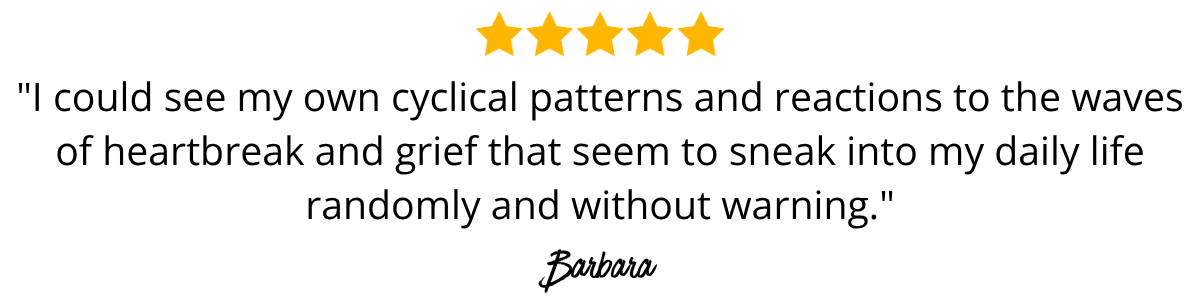
If any of that sounds familiar, you're in large company. None of it is evidence that something is wrong with you.
The trouble was never a shortage of effort. If you grew up believing you were never quite good enough, healing can turn into one more test to pass. I call this the Broken-Project Trap. It treats you like a renovation that keeps failing inspection, and it charges you for every visit.
Most of us were sold one of two promises. The first says that if you finish the program and follow the protocol, you'll come out whole. The second sounds wiser: healing is lifelong, so keep doing the practices forever.
Both seem reasonable. Programs advertise the first one. A therapist may tell you you've made real progress, and that progress deserves credit.
Here is where it goes wrong. Under the first promise, a hard week means you were never healed. Under the second, it means you haven't done enough work. The math lands on the same answer every time, and the answer is you.
So you keep performing recovery. You hide the setbacks and stay strong for everyone who depends on you. Meanwhile you quietly wonder why all this work hasn't fixed you yet.
Progress is real. It just isn't immunity. Stress, loss and plain ordinary life can bring familiar reactions back, and that says nothing about whether the ground you covered was real.
A bathing suit is a perfectly good thing. Unpack it halfway up a snowy mountain and it becomes very optimistic luggage.
Many recovery tools work the same way. Meditation can help when your attention has room in it. On a depleted week, sitting still can make the numbness louder. A gratitude list asks you to produce warm feelings on command, and the blank page starts to look like proof you can't even do healing right.
Then there's the new routine. Up at 5:30, journaling, supplements, movement, a sleep tracker that soon confirms you're bad at sleeping too. A body that needed less now has a part-time administrative job.
When a tool fails, nobody blames the tool. The woman goes on trial instead.
Every one of these fixes assumes you're standing somewhere you may not be. Nobody asked where you were first.
In 2018, I sat on my back porch in the dark, staring at nothing and feeling nothing. I was convinced this was all there was.
Nobody was worried about me. I was the executive who broke records and the mom who remembered every appointment. I needed nothing from anyone. I spent about ten years in that place, and I had no name for it, because you can't name somewhere you don't know you're standing.
I thought my ability to keep going meant I was okay. My body knew the difference. I didn't.
After my marriage ended, I rebuilt my sense of self around a job title. It looked like an excellent recovery story. Then I was laid off. I dropped the kids at school, came home and stared at the wall, and the first thought was immediate: I thought I had healed.
The terrain looked exactly the same. I didn't. I recognized where I was sooner, and I could see how I'd been using performance to hold myself together. The first time out gave me survival. The second gave me the Spiral.
I was never a broken project. I was a person without a map.
When you stop measuring yourself against "healed" and start asking where you're standing, a hard week becomes a location instead of a verdict.
The book starts with one question before it hands you any practice: what is getting everything done costing you? A productive week tells you things got done. It says nothing about what your body spent to do them.
New experiences of safety don't erase old learning about threat. They sit beside it. Under heavy stress, the older route is faster to reach because it had years of practice. So you can know exactly why you react a certain way and still react that way. I picture it as a locked cabinet. Everything you've learned is still filed inside, and stress has turned the key for now.
A return closes the cabinet for a while. It doesn't empty it. No return starts from zero.
The Spiral is the map I drew after walking the ground. It names four terrains you may return to many times.
The Ashes can feel like nothing, and sometimes nothing feels fine. Everything essential gets done, and you disappear the moment no one needs you.
The Ember is when a thought gets through: something has to change. You may not know what yet.
In the Flame, that awareness starts shaping your choices. You say no where yes used to come out on its own, and some things fall away.
The Rise is room to explore, try things and change your mind without putting your whole self on trial.
The You Are Here reflection in the book helps you name your current terrain and what it may need. It's a reflection tool, never a diagnosis. In the Ashes, what you need may be grace and one small cut to a demand you control. That's a very different prescription from another app.
Five simple moves that help you know where you are and what that place needs.

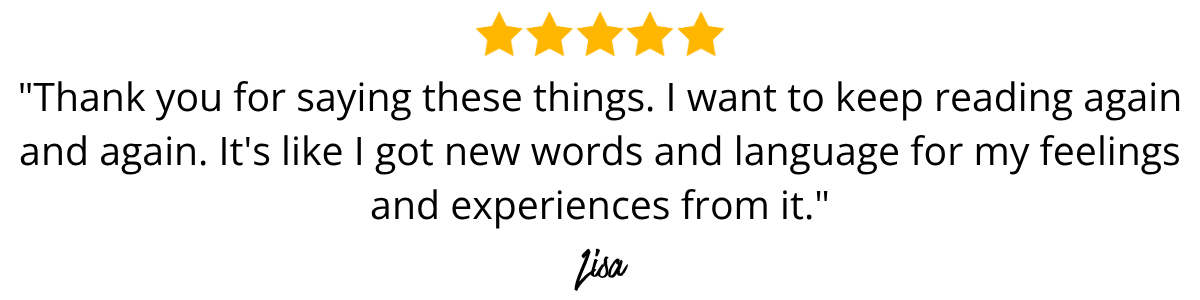
"I have been praying for this. Thank you."
"She gets it. She's been in it. She's not going to look at you like you're broken."
"She gives you a place to start."
The man I call Andrew is a composite, drawn from an Instagram message, later emails and responses to articles. We never worked together formally. He came with decades of therapy behind him and a challenge: did any of this apply to men?
He believed his wife saw him as a fire blanket, thrown over every problem to make the room safe. When I asked why, he said, "By things she has done." We went through each one. She had never said it. Every piece of evidence was a prediction, built from people who had punished him before.
His wife was frightened too, and hiding it to protect him. He was hiding his shutdown to protect her. Both were in the Ashes, reading each other's silence as judgment.
They started using Ashes, Ember, Flame and Rise as shared words. I lost the thread after that, and I won't invent an ending. The last I heard, they were talking in a way they hadn't before, reading each other's silence as fear instead of judgment.


Lauren Tobey is a writer, speaker and trainer. She spent about ten years in the Ashes, found her way back twice, and drew the Spiral from her own returns.
She's a Certified Trauma Specialist with a bachelor's degree in psychology and a master's from the University of Denver. She spent seven and a half years at a Texas home care nonprofit, working her way up from event coordinator to Chief Impact Officer. She admits she collected some of those credentials because she didn't trust her own thinking.
She's a mom who will defend cereal as dinner, who finds Target restful and who now refuses to dress up for Halloween, having worn a mask long enough. Her mission is giving women the map she didn't have. The book ends with an invitation to a free 1:1 Map Your Recovery Call, so if you'd like help finding where you're standing, let's have a conversation.
The next hard week may still come. This time you can name the terrain while you're in it, take one thing off your plate, and stop spending energy on fixes built for somewhere else.